Die Unterscheidung zwischen einem Honorarkonsul und einem Berufsdiplomaten ist nicht nur eine Frage des Prestiges oder des Protokolls – es handelt sich um eine grundlegende Frage der Zuständigkeit mit direkten Auswirkungen auf die Rechtsstellung, den Umfang der Immunität und die Befugnisse, mit denen ein Vertreter im Namen eines ausländischen Staates handeln darf. Für sehr vermögende Privatpersonen, hochrangige Politiker sowie die sie beratenden Anwälte und Treuhänder ist das Verständnis dieser Unterscheidung eine Voraussetzung dafür, jede Ernennung eines Nicht-Berufsdiplomaten mit der gebotenen Sorgfalt zu bewerten.
Die beiden Rollen unterliegen unterschiedlichen internationalen Rechtsinstrumenten, sind mit wesentlich unterschiedlichen Schutzbestimmungen verbunden und erlegen sowohl dem ernennenden Staat als auch der betreffenden Person unterschiedliche Verpflichtungen auf. Ein Berufsdiplomat ist als Vollzeit-Beamter im Sinne des Wiener Übereinkommens über diplomatische Beziehungen (1961) tätig und verfügt über weitreichende Immunität sowie nationale Zuständigkeit. Ein Honorarkonsul – ein Privatbürger, der auf Teilzeitbasis und ohne Gehalt ernannt wird – unterliegt dem enger gefassten Rahmen des Wiener Übereinkommens über konsularische Beziehungen (1963) mit einer Immunität vor der Gerichtsbarkeit, die im Allgemeinen an offizielle konsularische Handlungen gebunden ist, sowie weiteren Schutzbestimmungen gemäß Kapitel III und, soweit anwendbar, Artikel 71.
Im Folgenden wird eine strukturierte Analyse der gerichtlichen Zuständigkeit beider Rollen vorgestellt: ihre rechtliche Struktur, die Beschränkungen der Immunität, die Ernennungsurkunden sowie die praktischen Auswirkungen für jede prominente Person oder jeden Vermittler, der die Übereinstimmung zwischen beruflicher Stellung und offizieller internationaler Funktion bewertet. Der Compliance-orientierte Ansatz von William Blackstone Internacional bei beratenden Dienstleistungen für nichtkarrierebezogene Diplomaten – einschließlich erster Beratungsmemoranden, Zuständigkeitsanalysen und der Überprüfung der Rahmenbedingungen – setzt genau hier an: mit der Klarheit darüber, was jede Rolle nach internationalem Recht gewährt und was nicht.
Honorarkonsul vs. Berufsdiplomat: Wesentliche rechtliche Definitionen
Die Debatte um Honorarkonsul vs. Berufsdiplomat ist nicht nur rein akademischer Natur – sie bestimmt die Rechtsstellung, den Umfang des staatlichen Schutzes und die Befugnisse, mit denen ein Vertreter im Namen eines ausländischen Staates handeln darf. Das Verständnis dieser Unterschiede ist von entscheidender Bedeutung, ganz gleich, ob es um konsularische Dienstleistungen, die Überprüfung von Beglaubigungsschreiben oder die Bewertung von diplomatische Funktionen außerhalb des Berufslebens nach internationalem Recht.
Karriere-Diplomat
Ein Vollzeitmitglied des Auswärtigen Dienstes des Entsendestaates, das im Rahmen der innerstaatlichen Ernennungsverfahren rekrutiert wurde. Berufsdiplomaten erhalten Gehälter und Sozialleistungen und sind ausschließlich im Rahmen des Auswärtigen Dienstes ihrer Regierung tätig. Ihre Loyalität – und ihr Gehalt – schulden sie ausschließlich dem Entsendestaat.
Berufsdiplomaten sind hauptamtliche Beamte ihres Entsendestaats, während Honorarkonsuln oft Privatpersonen sind, die ihre Aufgaben nebenberuflich und ohne Gehalt wahrnehmen.
Rechtlicher Rahmen:Wiener Übereinkommen über diplomatische Beziehungen (1961) und Wiener Übereinkommen über konsularische Beziehungen (1963). Die Einstellung und Vergütung richten sich nach den innerstaatlichen Vorschriften.
Honorarkonsul
Eine Privatperson, die häufig bereits im Gaststaat (Aufnahmestaat) ansässig ist und konsularische Aufgaben in Teilzeit wahrnimmt, nicht fest angestellt Grundlage. In Das „Whitehead Journal of Diplomacy and International Relations“ (2005), Euripides L. Evriviades beschreibt Honorarkonsuln als Bindeglied zwischen einer Botschaft und ihren im Ausland lebenden Staatsangehörigen, zu deren Aufgaben die Unterstützung der Bürger sowie die Förderung von Handel und Investitionen gehören. Die Wiener Übereinkommen über konsularische Beziehungen (1963) legt diese Unterscheidung formell fest.
Artikel 43, der gemäß Artikel 58 auf honorarische Konsularbeamte Anwendung findet, gewährt Immunität vor der Gerichtsbarkeit für amtliche konsularische Handlungen, vorbehaltlich der darin genannten Ausnahmen. Artikel 71 befasst sich speziell mit Konsularbeamten, die Staatsangehörige oder Personen mit ständigem Wohnsitz im Aufnahmestaat sind; er regelt nicht die Stellung jedes einzelnen Honorarkonsuls.
Quelle: Vertragssammlung der Vereinten Nationen
Der Honorarkonsul fungiert zudem als wichtiges Bindeglied und Vermittler zwischen der Botschaft der Regierung und ihren im Ausland lebenden Bürgern.
Quelle:Euripides L. Evriviades, The Whitehead Journal of Diplomacy and International Relations (2005), S. 24.
Funktionelle Immunität
Eine eingeschränkte Form des Rechtsschutzes, die sich nur auf Handlungen in amtlicher Eigenschaft erstreckt – der Standard, der standardmäßig für Honorarkonsuln gilt, im Gegensatz zu der umfassenderen Immunität, die Berufsdiplomaten gewährt wird.
Das Verständnis der Konsul vs. Honorarkonsul „divide“ erfordert zudem Klarheit hinsichtlich der Absendestaat vs. Empfängerstaat Beziehung. Der Entsendestaat ernennt den Leiter einer konsularischen Vertretung und stellt in der Regel eine Ernennungsurkunde oder ein ähnliches Dokument aus, in dem die Ernennung und der Konsularbezirk gemäß Artikel 11 festgelegt sind. Die Zulassung durch den Aufnahmestaat ist ein gesonderter Schritt: Seine Genehmigung ist die exequatur gemäß § 12. Eine vorläufige Zulassung ist gemäß § 13 möglich. VCCR §§ 10–13 Diese Schritte sind zu unterscheiden; eine Ernennung durch den Entsendestaat darf nicht mit einer Zulassung durch den Aufnahmestaat verwechselt werden.
Wohnsitz, Staatsangehörigkeit und örtliche Verbindungen müssen anhand der Ernennungsvorschriften beider Staaten geprüft werden. Gemäß VCCR § 22, für die Ernennung eines Staatsangehörigen des Aufnahmestaats ist die ausdrückliche Zustimmung dieses Staates erforderlich.
Attribut
Karriere-Diplomat
Honorarkonsul
Beschäftigungsstatus
Vollzeit-Beamter
Privatperson, in Teilzeit
Vergütung
Gehalt durch den entsendenden Staat
Nicht festangestellt (kann Honorare einbehalten)
Ernennungsurkunde
Ernennung im Inland; der Position entsprechende Beglaubigungsschreiben oder Benachrichtigung
Kommission oder Notifikation des Entsendestaats; Exequatur des Empfangsstaats für einen Leiter einer diplomatischen Vertretung
Regelungsrahmen
Wiener Übereinkommen über diplomatische Beziehungen (1961)
Wiener Übereinkommen über konsularische Beziehungen (1963)
Entscheiden Sie sich für ein System mit Berufsdiplomaten, wenn eine Vollzeitvertretung des Staates und weitreichende Zuständigkeiten erforderlich sind. Das Modell des Honorarkonsuls eignet sich für Situationen, in denen eine vertrauenswürdige lokale Persönlichkeit eine eher begrenzte, auf die lokale Gemeinschaft ausgerichtete Rolle übernehmen kann, ohne dass der Aufwand einer ständigen Vertretung entsteht.
Die Unterscheidung zwischen der Ernennung durch den Entsendestaat und der Zulassung durch den Aufnahmestaat trägt dazu bei, zu erklären, warum der Rechtsstatus und der Umfang des Schutzes getrennt geprüft werden müssen.
Direkter Vergleich: Status, Immunität und Geltungsbereich
Verständnis Was ist ein Honorarkonsul? In der Praxis bedeutet dies, über bloße Titel hinauszugehen und sich mit der konkreten rechtlichen Struktur zu befassen, die für die jeweilige Rolle maßgeblich ist. Für sehr vermögende Privatpersonen (UHNWIs), die sich mit Beratung durch Diplomaten außerhalb des Laufbahnsystems Was Ernennungen betrifft, so sind die nachstehenden Unterscheidungen keine bloßen administrativen Randnotizen – sie haben direkte Auswirkungen auf den Vermögensschutz, das Reiserecht und das rechtliche Risiko.
Die beiden Rollen unterscheiden sich deutlich in vier Dimensionen, die für jede strukturierte Bewertung von größter Bedeutung sind:
Funktion
Karriere-Diplomat
Honorarkonsul
Immunitätsgrad
Persönliche Unverletzlichkeit und weitreichende gerichtliche Immunität gemäß den Artikeln 29 und 31 des VCDR, vorbehaltlich zivil- und verwaltungsrechtlicher Ausnahmen, Verzicht gemäß Artikel 32 sowie der Staatsangehörigkeits- und Wohnsitzvorschriften in Artikel 38
Gerichtsimmunität für amtliche konsularische Handlungen gemäß den Artikeln 43 und 58, vorbehaltlich der Ausnahmen und der Staatsangehörigkeits- und Wohnsitzvorschriften in Artikel 71 des Wiener Übereinkommen über konsularische Beziehungen (VCCR)
Zuständigkeitsbereich
Im Wesentlichen national; kann die Interessen der Bundesstaaten im gesamten Gastland vertreten
Beschränkt auf einen definierten Konsularbezirk; die Diplo-Stiftung Sowohl das US-Außenministerium als auch das Amt für Auslandsvertretungen bestätigen diese geografische Beschränkung
Voraussetzungen für die Ausstellung eines Reisepasses
Die Voraussetzungen für die Ausstellung eines Reisepasses und dessen amtliche Verwendung richten sich nach dem Recht des ausstellenden Staates
Kein automatischer Anspruch auf einen Diplomatenpass – ein weit verbreiteter Irrtum; die Berechtigung hängt ausschließlich vom innerstaatlichen Recht des entsendenden Staates ab. Überprüfung die rechtlichen Voraussetzungen für den Anspruch auf einen Diplomatenpass bevor man Vermutungen anstellt
Vergütung und Verpflichtung
Beamter im Staatsdienst mit Vollzeitbeschäftigung und den damit verbundenen Anforderungen des Auswärtigen Dienstes
In der Regel unbezahlt oder gegen eine symbolische Vergütung; geht einer privaten Tätigkeit nach und arbeitet nebenberuflich auf ehrenamtlicher Basis
Gerichtsbarkeit ist ein häufiger blinder Fleck. Berufsdiplomaten sind landesweit tätig, während Honorarkonsuln geografisch an einen Konsularbezirk gebunden sind – eine Grenze, die für jeden UHNWI, dessen Vermögen sich auf mehrere Regionen eines Gastlandes verteilt, konkrete Auswirkungen hat.
Das Missverständnis bezüglich des Reisepasses verdient besondere Beachtung. Viele Kandidaten gehen davon aus, dass eine Ehrenernennung automatisch den Anspruch auf diplomatische Reisedokumente mit sich bringt. In der Praxis ist dieser Anspruch jedoch bundesstaatsspezifisch, rechtlich geregelt und selten garantiert – weshalb eine unabhängige Überprüfung vor der Gestaltung einer Ernennung unabdingbar ist.
Es ist jedoch die Immunitätslücke die den Risikograd am unmittelbarsten beeinflusst. Das VCDR gewährt diplomatischen Vertretern im Allgemeinen einen umfassenderen Schutz als das VCCR den Honorarkonsuln, vorbehaltlich der Ausnahmen und der Staatsangehörigkeits- bzw. Wohnsitzvorschriften der jeweiligen Konvention – eine Unterscheidung, deren rechtliche Grenzen einer gesonderten Analyse bedürfen.
Das Fazit: Vergleichen Sie die Schutzmaßnahmen der einzelnen Funktionen mit Ihrem tatsächlichen Vermögensbestand, bevor Sie eine Ernennung als Schutzschild betrachten.
Analyse der gerichtlichen Zuständigkeit: Die Einschränkung durch die ‘funktionale Immunität’
In den vorangegangenen Abschnitten wurde die strukturelle Kluft zwischen Berufungen in Festanstellungen und Ehrenämtern aufgezeigt. Was dieser Vergleich jedoch nicht vollständig deutlich macht, ist die Rechtsrisiko die dadurch entsteht – insbesondere für Schulleiter, deren berufliche und private Aktivitäten sich über mehrere Zuständigkeitsbereiche erstrecken.
Funktionale Immunität betrifft Handlungen, die in Ausübung konsularischer Aufgaben vorgenommen werden. §§ 43, 58, 63 und 71 VCCR müssen im Zusammenhang gelesen werden. Artikel 58 wendet Artikel 43 auf Honorarkonsularbeamte an; Artikel 43 enthält zudem Ausnahmen für bestimmte zivilrechtliche Ansprüche. Artikel 63 befasst sich mit Strafverfahren gegen Honorarkonsuln. Artikel 71 sieht eine gesonderte, enger gefasste Regelung für Konsularbeamte vor, die Staatsangehörige oder Personen mit ständigem Wohnsitz im Aufnahmestaat sind, sofern dieser Staat keine zusätzlichen Vorrechte gewährt. Keine dieser Bestimmungen begründet eine allgemeine Befreiung für privates geschäftliches Handeln.
Die Unterscheidung zwischen amtlichen Handlungen und privaten Tätigkeiten sollte im Hinblick auf den jeweiligen Rechtsstreit und die jeweilige Gerichtsbarkeit geprüft werden. Ein konsularischer Titel allein begründet keine Immunität.
Dimension
Honorarkonsul
Karriere-Diplomat
Geltungsbereich der Immunität
Nur amtliche Handlungen (funktional)
Umfassende persönliche Unverletzlichkeit
Strafgerichtsbarkeit
Vorbehaltlich der Anwendung staatlicher Rechtsvorschriften für privates Verhalten
Immunität vor der strafrechtlichen Gerichtsbarkeit des Empfangsstaats gemäß Artikel 31, vorbehaltlich eines Verzichts und gemäß Artikel 38
Reisedokument
In der Regel behalten sie ihren zivilen Reisepass – ein weit verbreiteter Irrtum ist, dass Honorarkonsuln automatisch einen Diplomatenpass erhalten; dies ist in der Regel nicht der Fall. Eine detaillierte Aufschlüsselung der wer tatsächlich Anspruch darauf hat, die gesetzlichen Anforderungen unterscheiden sich je nach Entsendestaat erheblich.
Vom Entsendestaat ausgestellter Diplomatenpass
Staatsangehörigkeit des Gastlandes zulässig
Möglich mit ausdrücklicher Zustimmung des Empfangsstaats gemäß Artikel 22 des VCCR
Möglich mit Zustimmung des Aufnahmestaats gemäß Artikel 8 des VCDR; Artikel 38 schränkt den Schutz ein
Private geschäftliche Aktivitäten
Zulässig, jedoch in vollem Umfang den örtlichen Rechtsvorschriften unterworfen
Private berufliche oder gewerbliche Tätigkeiten zum persönlichen Gewinn im Aufnahmestaat sind gemäß Artikel 42 des VCDR verboten.
Zuständigkeitsprüfung erforderlich
In komplexen Fällen ist Vorsicht geboten; etwaige rechtliche Anforderungen richten sich nach dem geltenden Recht
Institutionell abgewickelt durch den Absenderstaat
Die Doktrin der „Official Acts“ zieht die entscheidende Grenze. In der Praxis unterliegen alle privaten geschäftlichen Transaktionen – Immobilienbesitz, Investitionstätigkeiten, Vorstandstätigkeiten –, die ein Honorarkonsul tätigt, uneingeschränkt dem lokalen Recht. Der Titel schafft keine rechtliche Schutzbarriere. Für UHNWIs, die neben ihrer konsularischen Ernennung Vermögenswerte in mehreren Rechtsordnungen besitzen, ist diese Unterscheidung nicht rein theoretischer Natur: Ein privater Handelsstreit erlangt keine konsularische Immunität, nur weil eine der Parteien diesen Titel trägt.
Staatsangehörigkeit des Aufnahmestaats führt zu weiterer Komplexität. Artikel 22 des VCCR macht die Ernennung eines Staatsangehörigen des Aufnahmestaats von der ausdrücklichen Zustimmung dieses Staates abhängig. Artikel 71 regelt dann den Schutz von Staatsangehörigen und Personen mit ständigem Wohnsitz. Ein Honorarkonsul mit doppelter Staatsangehörigkeit kann gleichzeitig steuerlichen Verpflichtungen, aufsichtsrechtlichen Anforderungen und zivilrechtlicher Haftung in derselben Gerichtsbarkeit unterliegen, in der er tätig ist – ohne allgemeine konsularische Immunität in privaten Angelegenheiten; jeglicher zusätzlicher Schutz muss gemäß den geltenden Vorschriften festgelegt werden.
Ein gängiges Muster bei globalen Auftraggebern ist, dass die Frage, ob Ehrenkonsuln diplomatische Pässe erhalten, frühzeitig aufgeworfen wird, während die folgenreichere Frage – wie das lokale Recht privates Verhalten behandelt – oft aufgeschoben wird, bis ein Problem auftritt.
Für UHNWIs ist die Überprüfung der Zuständigkeitsverhältnisse vor der Annahme einer nicht-beruflichen Ernennung kein optionaler Schritt. Sie bildet die analytische Grundlage, die verhindert, dass ein Reputationskapital zu einer rechtlichen Belastung wird.
Bevor eine Ehrenernennung geprüft wird, sollten alle Rechtsordnungen, in denen Privatvermögen gehalten wird, mit den rechtlichen Rahmenbedingungen des aufnehmenden Staates abgeglichen werden – der Titel schützt die Funktion, nicht die Person.
Fazit: Strategische Erkenntnisse für den globalen Schulleiter
Der Vergleich zwischen Berufsdiplomaten und Honorarkonsuln läuft letztendlich auf eine einzige praktische Frage hinaus: Welchen Schutz und welchen praktischen Nutzen bringt eine Ernennung von Nicht-Berufsdiplomaten tatsächlich mit sich? Die Antwort lautet durchweg: Honorkonsul, diplomatische Immunität ist funktional und eng gefasst – die Immunität von der Gerichtsbarkeit betrifft im Allgemeinen amtliche konsularische Handlungen, während das Übereinkommen andere Schutzmaßnahmen und Ausnahmen gesondert regelt.
Im Zusammenhang mit der Ernennung von Honorarkonsuln durch Zypern, Euripides L. Evriviades betont Integrität, Urteilsvermögen, soziale Kontakte und finanzielle Situation. Dies sind Auswahlkriterien, kein rechtlicher Schutzschild. Schulleiter, die bei solchen Ernennungen von einer umfassenden Immunität ausgehen, gehen von einer grundlegend falschen Prämisse aus.
Bevor eine Ernennung voranschreitet, gilt folgender Entscheidungsrahmen:
Verstehen Sie den eigentlichen Zweck der Rolle. Ehrenämter verschaffen diplomatischen Zugang und lokale Glaubwürdigkeit – jedoch keinen persönlichen Rechtsschutz.
Prüfen Sie zunächst die Rahmenbedingungen des Absenderstaates. Die rechtlichen Bestimmungen unterscheiden sich von Bundesstaat zu Bundesstaat erheblich; eine sorgfältige Prüfung des Konsularrechts des entsendenden Bundesstaates ist unabdingbar.
Die Einhaltung von Vorschriften hat Vorrang vor Bequemlichkeit. Eine auf Compliance ausgerichtete Beratung ist der einzige zuverlässige Weg, um die strukturellen Risiken zu mindern, die mit der Besetzung von Nicht-Laufbahnstellen verbunden sind.
Prüfen Sie, wie die Immunität in der Praxis abgegrenzt wird. Die funktionale Immunität gilt nur für Amtshandlungen – Verständnis Was ein Diplomatenpass rechtlich abdeckt hilft dabei, zu klären, wo der Schutz beginnt und wo er endet.
Führen Sie eine spezialisierte rechtliche Analyse durch. William Blackstone Internacional bietet eine Überprüfung der Rahmenbedingungen, die gute Absichten in rechtlich haltbare Positionen umsetzt.
Die Geschäftsführer, die Ernennungen ohne Beförderung erfolgreich meistern, sind diejenigen, die diese als strategische Instrumente betrachten, die eine solide rechtliche Grundlage erfordern – und nicht als rein zeremonielle Titel. Eine strukturierte Beratung ist auf dieser Ebene kein Luxus, sondern entscheidet darüber, ob eine Ernennung ihren Zweck erfüllt oder unerwartete Haftungsrisiken mit sich bringt.
Bevor Sie eine konsularische Ernennung anstreben, lassen Sie eine Zuständigkeitsanalyse durchführen – der rechtliche Rahmen bestimmt stets das Ergebnis.Zuletzt aktualisiert: 26. September 2026



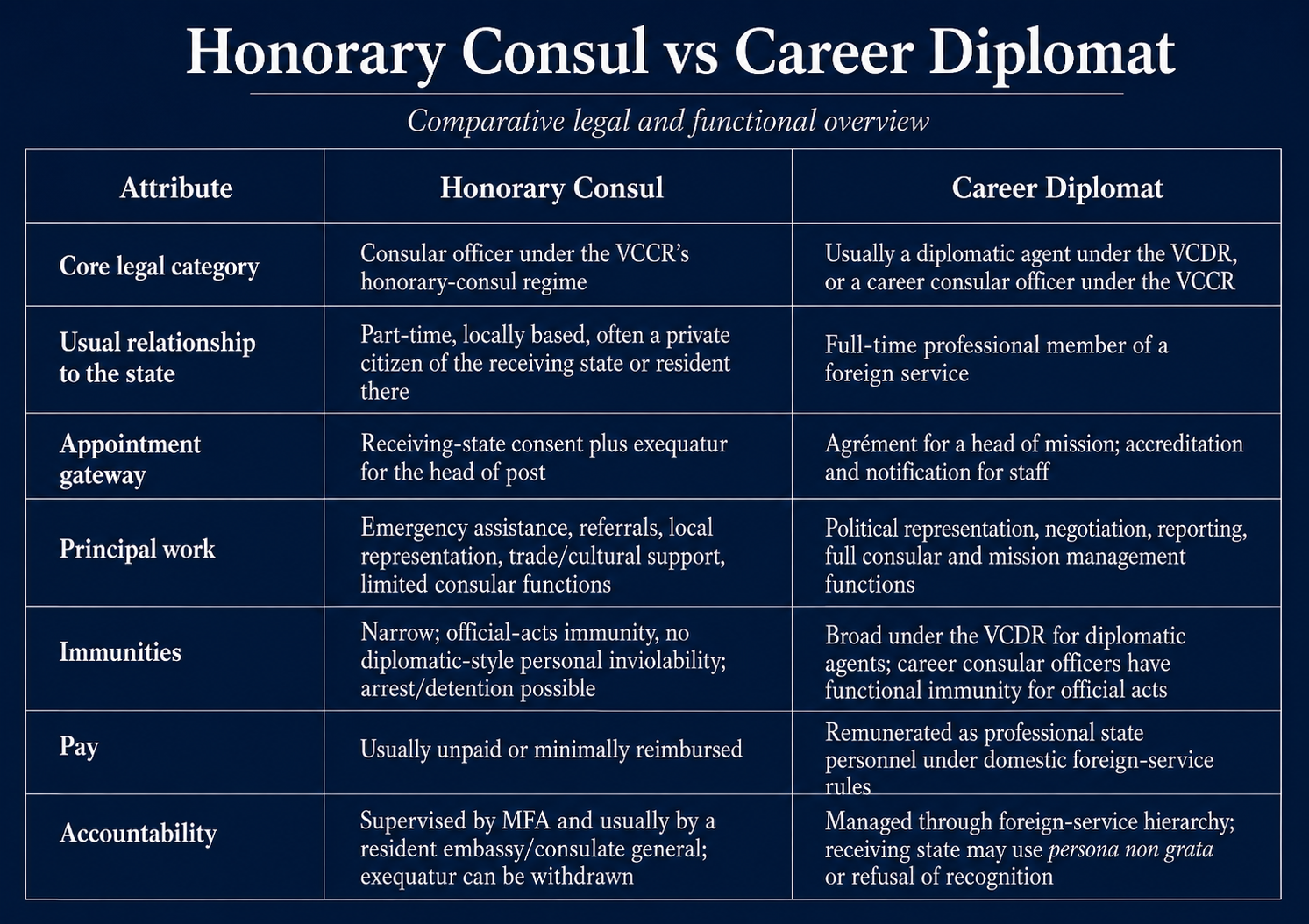
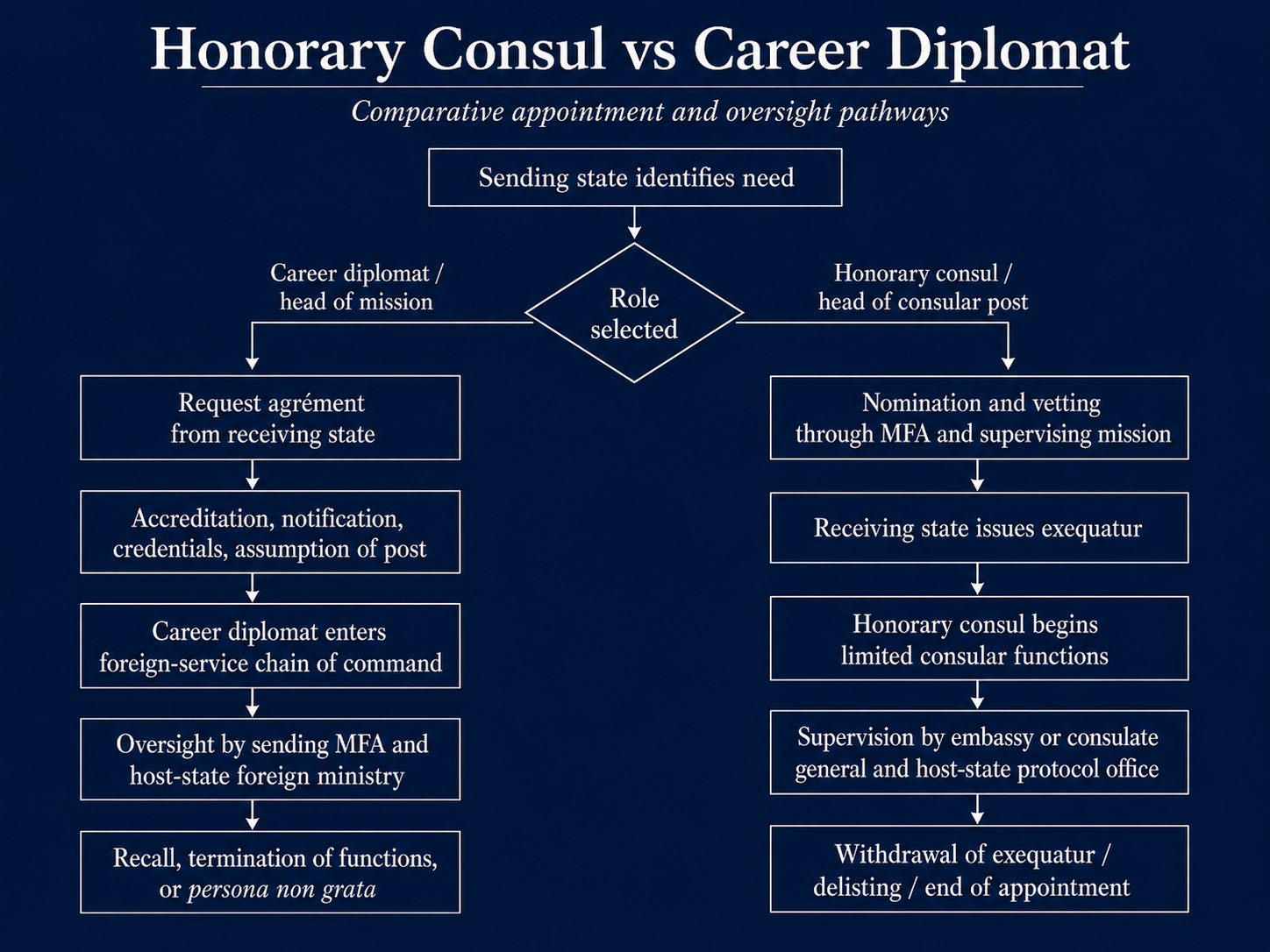 Die beiden Rollen unterscheiden sich deutlich in vier Dimensionen, die für jede strukturierte Bewertung von größter Bedeutung sind: